History of the Royal Australian Navy 
To fight and win at sea

Commonwealth Naval Forces and the formation of the Royal Australian Navy


The Commonwealth Naval Forces (CNF) were established on March 1, 1901, with the amalgamation of the six separate colonial naval forces, following the Federation of Australia. The Commonwealth Navy initially consisted of the former New South Wales, Victorian, Queensland, Western Australian, South Australian and Tasmanian ships and resources of their disbanded navies. The ships that the CNF inherited from the colonial navies were old and inadequate, even for training.

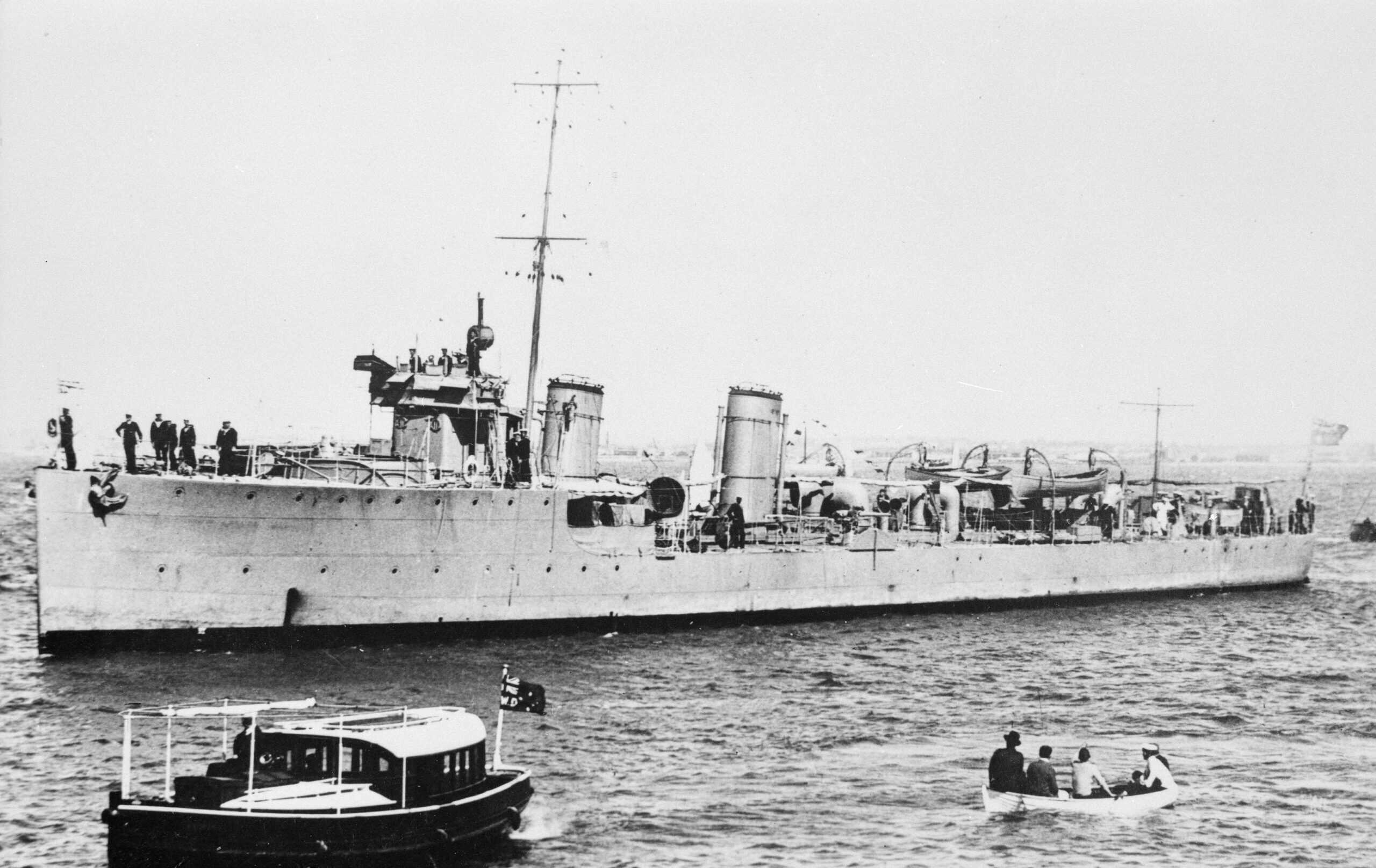
The Defence Act 1903 established the operation and command structure of the Commonwealth Navy. The first of the Navy's new vessels, the destroyer HMAS Yarra, was completed in September 1910, and by the outbreak of the First World War the majority of the planned fleet had been realised.

A dilapidated Australian navy was not a major national concern. This was because it was thought that Britain’s Royal Navy could continue to provide maritime protection, as it had done for the colonies. Some local naval authorities, however, feared the withdrawal of British forces if war was to break out.

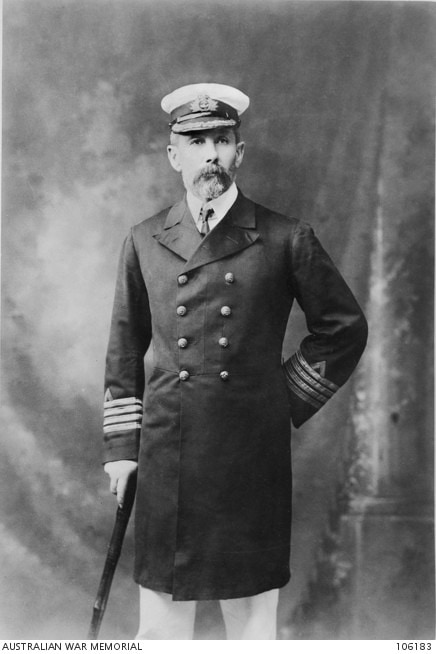
Led by Captain William Creswell, they argued that Australia was open to attack by sea, as it lay at the end of the world’s sea routes and had no land frontier. If an enemy could cut Australian communications and shipping, economic devastation would follow.

Creswell gradually developed the idea of a more capable navy, with Australian personnel. This was under the Commonwealth’s executive direction. Once he became director of Naval Forces in 1904, he embarked on a program designed to breathe new life into the CNF’s operations.


In December 1907, Deakin announced that the CNF would grow to include a flotilla of submarines and coastal destroyers. In February 1909, Australia’s naval representative in London requested tenders for the first three vessels. They were the destroyers:

  • HMAS Parramatta
  • HMAS Yarra
  • HMAS Warrego


Australian authorities intended that this flotilla would take full responsibility for coastal defence. However, by the time the first of the new destroyers, Parramatta and Yarra, arrived in Australia, Australian naval policy had made an even greater advance.

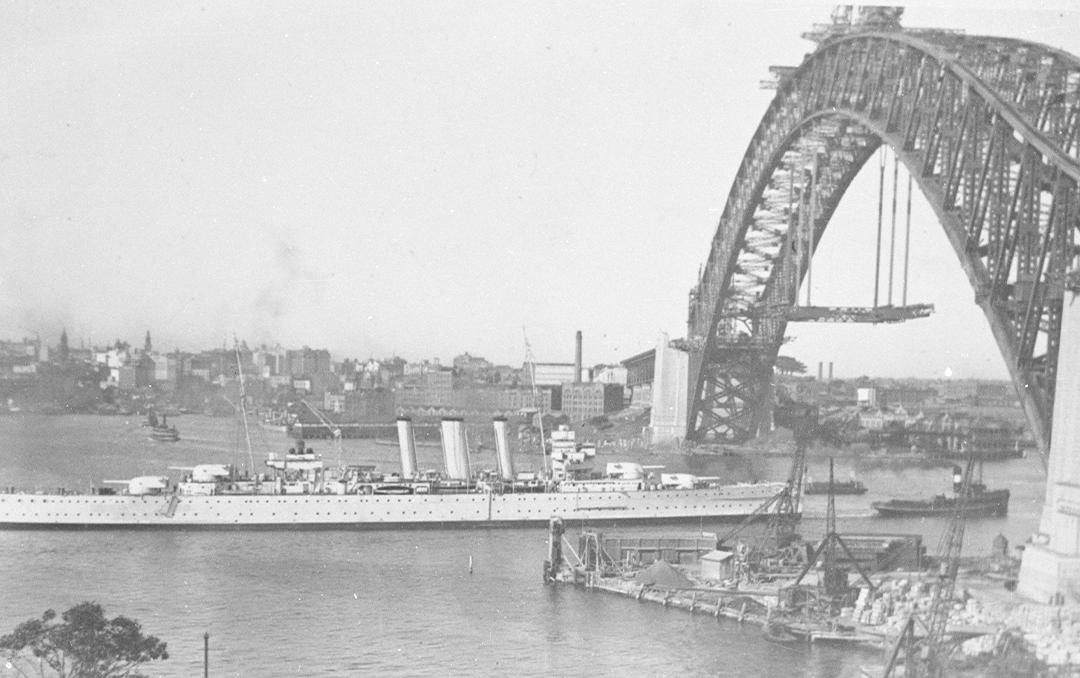
At the 1909 Imperial Defence Conference, the Admiralty suggested that the CNF expand to include a self-contained ‘fleet unit’. This would be based on a battlecruiser and several light cruisers.

On 10 July 1911, King George V granted this new navy the title ‘Royal Australian Navy’. The change in title reflected the progress made in the ten years since Federation. During that time, Australia had transformed a collection of obsolete vessels into a true fighting service.


Today, the Royal Australian Navy is one of the most sophisticated and capable naval forces in the Pacific region, with a significant and continuing presence in the three oceans that surround us. The Navy has a worldwide reach in support of Australia’s military and diplomatic commitments overseas. As the Royal Australian Navy faces changes both globally, and regionally in the Indo-Pacific, Australians can remain confident that their Navy possess the capabilities to successfully preserve and defend our maritime interests, and will have continued success in all of their worldwide operations, military campaigns and peacekeeping missions.

About the 125th anniversary and the publication

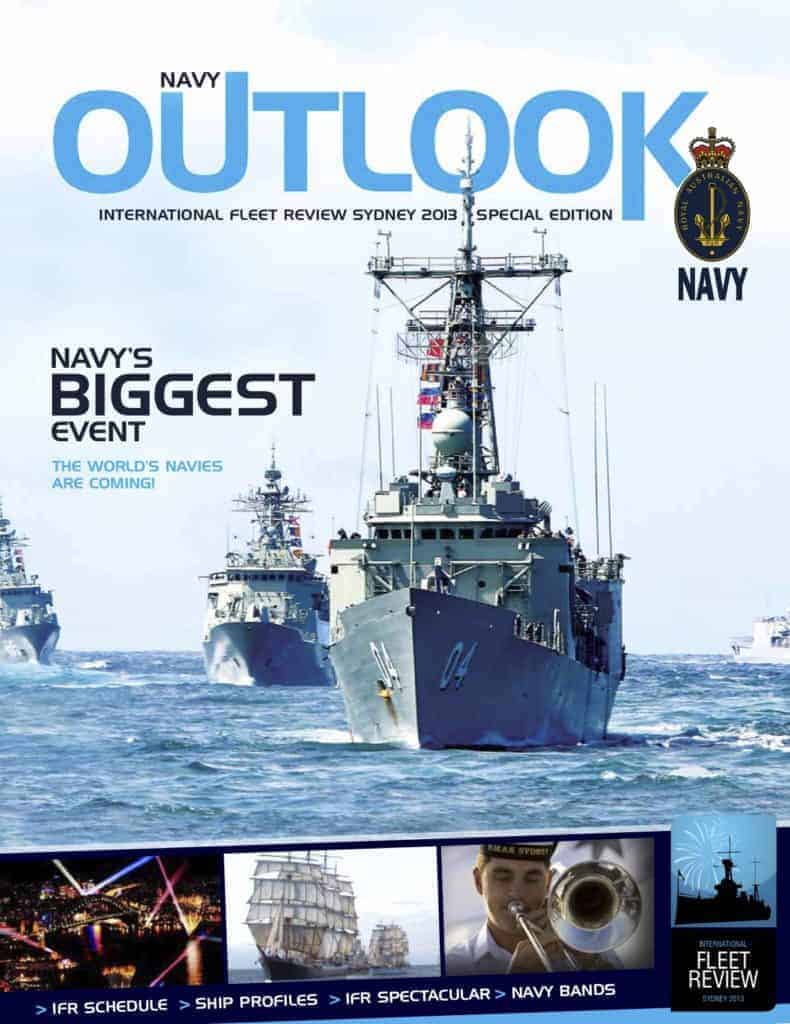
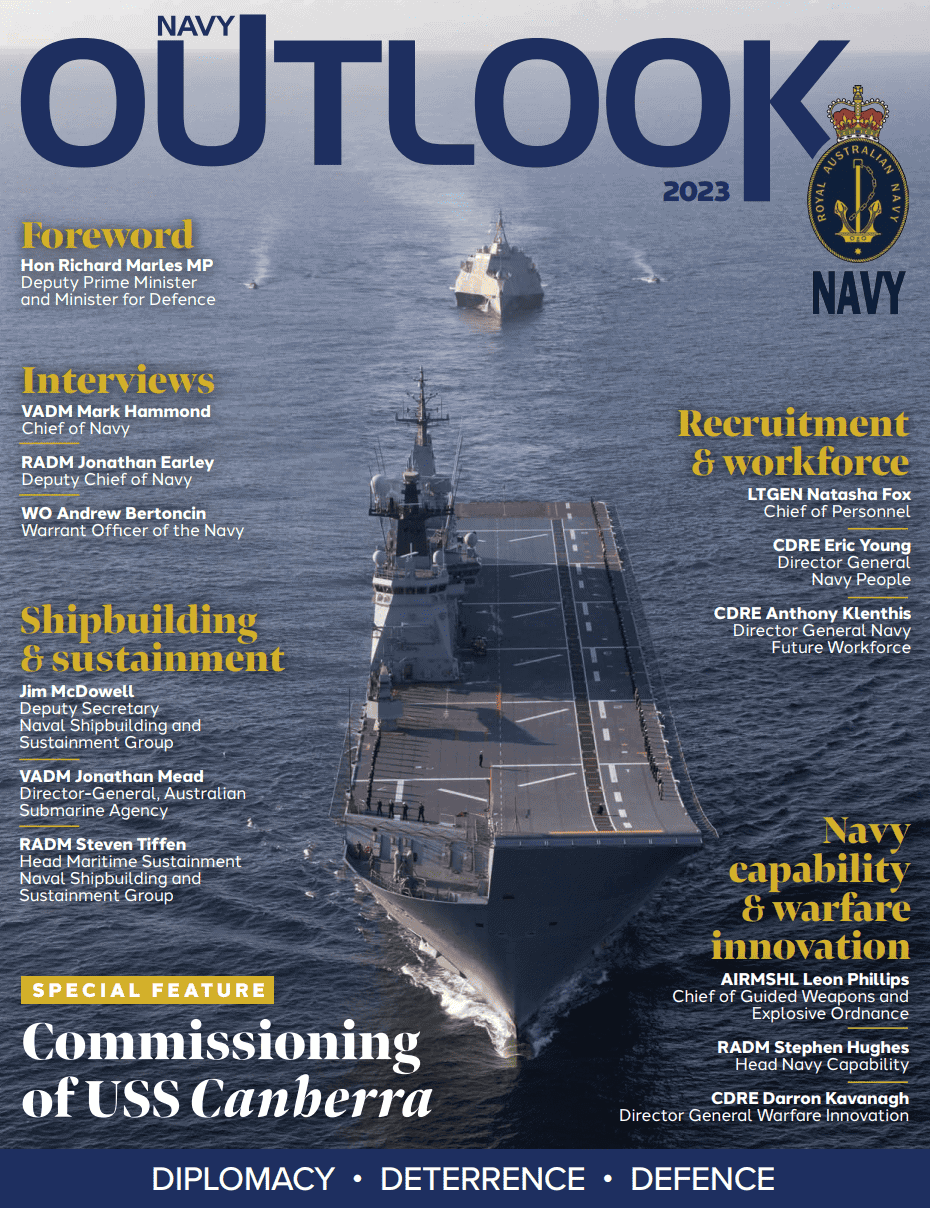
To coincide with the 125th anniversary, the Royal Australian Navy has appointed leading military and defence publishers, Faircount Media Group, to produce an official commemorative publication entitled 125 Years of the Royal Australian Navy & the 2026 International Fleet Review. The publication will serve as the centrepiece to the International Fleet Review being held in Sydney in 2026, and is designed to go hand-in-hand with the commemorative events being planned both nationally and internationally  to mark this significant occasion.

125 Years of the Royal Australian Navy & the 2026 International Fleet Review will be a perfect bound, glossy publication, produced to the highest quality, using the latest digital technology to combine designer page layouts and eye-catching photography. The editorial copy will be written by an impressive array of leading subject-matter experts, including naval historians from within the RAN Sea Power Centre, and other subject matter experts in Australian naval history, to authorities on the latest defence technologies. Articles will cover the extensive history of the Navy, an examination of its current programs, and priorities, as well as a look at the future fleet and technologies that will shape the Navy of the future. These stories will be told through the eyes of those currently serving and those who have served before them.

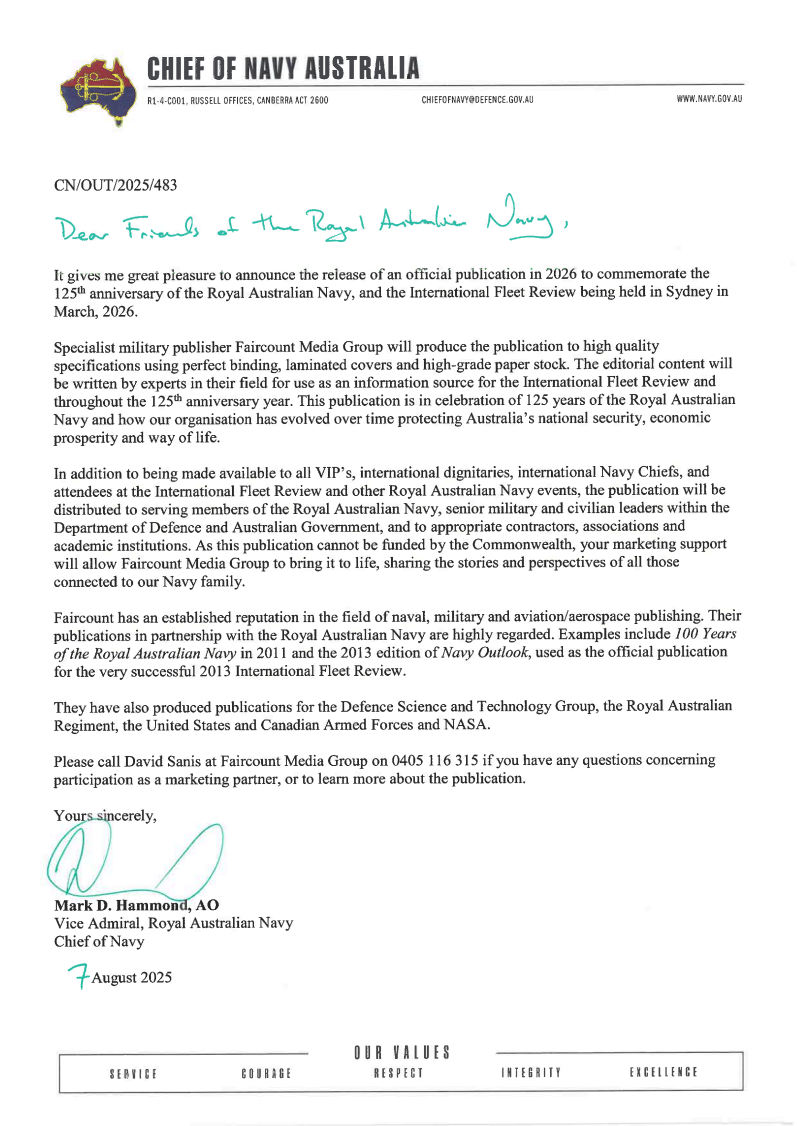
CN Evidence of Work Letter

EDITORIAL SYNOPSIS - TBA

Introductory Messages

Governor-General of Australia: Ms Sam Mostyn, AC
Prime Minister: Anthony Albanese (TBC)
Deputy Prime Minister and Minister for Defence: The Hon Richard Marles MP
Minister for Defence Personnel: The Hon Matt Keogh MP
Chief of Navy: Vice Admiral Mark Hammond AO RAN
Chief of the Defence Force: Admiral David Johnston AC RAN
Secretary of the Department of Defence: Greg Moriarty
President of the Naval Association: David Manolas
President of the Navy League: Mark Schweikert

International Fleet Review 2026

Welcome from the Lord Mayor of Sydney: Clover Moore AO (TBC)
Schedule of events for the IFR
Schedule of other 125th anniversary events happening throughout 2026
RAN ships attending the IFR
Participating international nations and ships attending the IFR

History of the Royal Australian Navy

Indigenous Shared Maritime Narrative
Commonwealth Naval Forces March 1901
Naming of the Royal Australian Navy 1911
WWI
AE1 & AE2 – The Silent ANZAC
Navy’s role in the ANZAC Campaign
WW2 - including The Coast Watchers
Korea War
FESR and Malaya Emergency
Vietnam
Acquisition of the O-Boats
Middle East Operations
Peacekeeping especially INTERFFET & RAMSI
Humanitarian including breakout on Shark 02
Hydrographic Office and Oceanography
Navy in Our Near North

Current and Future Navy

The future of Navy strategy
Maritime capability and the future fleet
Enhanced lethality

Special Interest Articles

Joint Forces and acknowledging Army’s 125th
International partnerships including the finding of the USS Edsall
Industry partnerships
Research, Technology and Innovation
Recruitment – the how and why people join Navy through time
Women: pioneers, and trailblazers 
Women reaching senior leadership roles
Navy families
U.S. Army Small Ships Association
Multi-generational families serving in the Navy

Throughout the publication will be interviews and articles with veterans, serving members, defence, and other organisations on the themes and pillars commemorating 125 Years of Service:

125 years of strength at sea
125 years of innovation at sea
125 years of adventure at sea
125 years of courage at sea
125 years of mateship at sea
125 years of community at home
125 years of prosperity at home
125 years of security at home

*Editorial contents subject to change

DISTRIBUTION

  • Attendees, dignitaries, VIPs, and participants at the 2026 International Fleet Review
  • Attendees, dignitaries, VIPs, and participants at all RAN commemorative events, both nationally and internationally

Navy, ADF and Government

  • All Navy personnel (Officers and Enlisted)
  • Government leaders and members of the Commonwealth Parliament including the offices of the Prime Minister, Minister for Defence, and the Minister for Defence Materiel.
  • Senior personnel throughout the ADF including the Australian Army, Royal Australian Air Force (RAAF), the Defence Science and Technology Group (DST), and the Capability Acquisition and Sustainment Group (CASG).

Private Sector

  • Senior executives from prime & sub contractors to the Royal Australian Navy.
  • Project managers for major contracts.
  • Executive management at the top defence firms.

ADVERTISING RATES

RUN OF PUBLICATION

Double Page Spread - $16,950

Full Page - $12,950

Half Page - $7,950

Third Page - $5,950

Quarter Page - $3,950

PRIME POSITION

Outside Back Cover - $19,950

Inside Front Cover Spread - $19,950

Inside Back Cover Spread - $18,950

Inside Back Cover - $14,950

Facing Introductory Messages - $14,950

Table of Contents or Masthead - $14,950

*All rates are net of agency commissions and ex GST, and are quoted in Australian Dollars

**All positions are four colour

The Naval Prayer

O Eternal Lord God,
who alone rulest the raging of the sea;
who has compassed the waters with bounds
until day and night come to an end;
be pleased to receive into Thy almighty and most gracious protection
the persons of us Thy servants,
and the Fleet in which we serve.

Preserve us from the dangers of the sea,
and from the violence of the enemy;
that we may be a safeguard unto our most gracious Sovereign Lady,
Queen Elizabeth,
and her Dominions,
and a security for such as pass upon the seas upon their lawful occasions;
that the inhabitants of our Commonwealth may in peace and quietness
serve Thee our God;
and that we may return in safety
to enjoy the blessings of the land,
with the fruits of our labours,
and with a thankful remembrance of Thy mercies
to praise and glorify Thy Holy Name;
Amen.

RELATED PUBLICATIONS

GET STARTED

ADVERTISE WITH US

To book a position in RAN 125

ENQUIRE NOW
RAN125